
Enterprise Performance Management (EPM) — Ohio State University
Designed a healthcare decision-support platform for COOs and CFOs — evolving from a mobile-first performance tracker into a web-based system with operating reviews, scenario simulation, and action planning. Final client: Ohio State University.
Guidehouse: AI Studio – Ohio State University (Health Commercial) · 2025–2026
Overview
Enterprise Performance Management (EPM) is a healthcare decision-support platform that helps executives review performance, model improvement strategies, and operationalize action plans.
The product originally began as EPMS (Enterprise Performance Management System), a mobile-first performance tracking concept. As stakeholder needs evolved, the platform expanded beyond reporting and matured into EPM, a scalable web system focused on decision-making under real-world constraints.
This case study documents that evolution.
Phase1:EPMS—PerformanceVisibility
Healthcare leaders relied on fragmented Excel files and outdated dashboards to track operational performance. Existing tools prioritized data completeness over usability, making it difficult to identify trends or act on insights.
EPMS was designed to unify key operational metrics into a mobile-firstexperience for COOs and CFOs.
EPMSearlyconcept(dashboard-style)
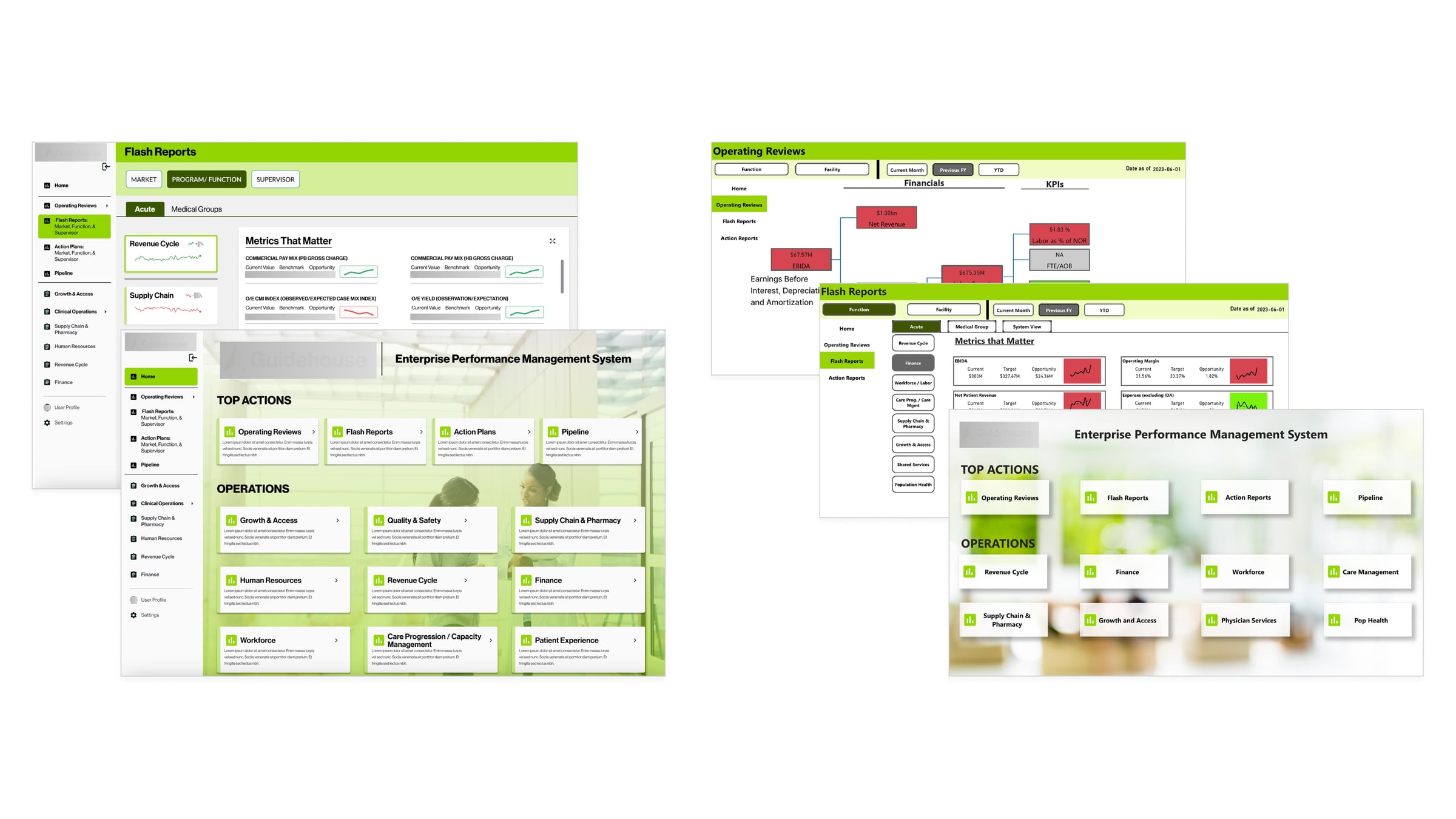
Early EPMS concepts focused on dense dashboards and performance visibility, validating what data mattered but not how decisions should be made.
EPMSMobile-FirstExperience
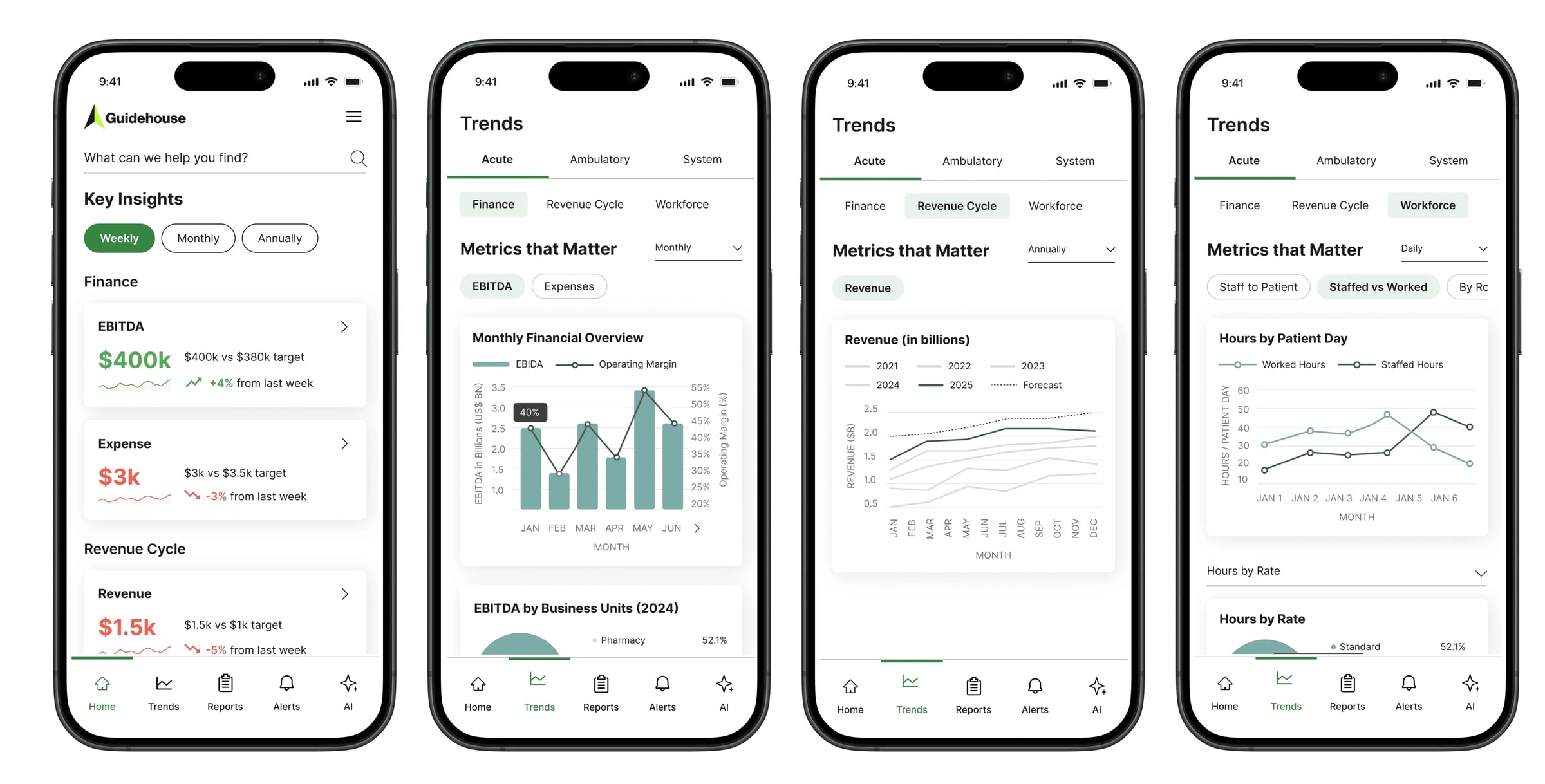
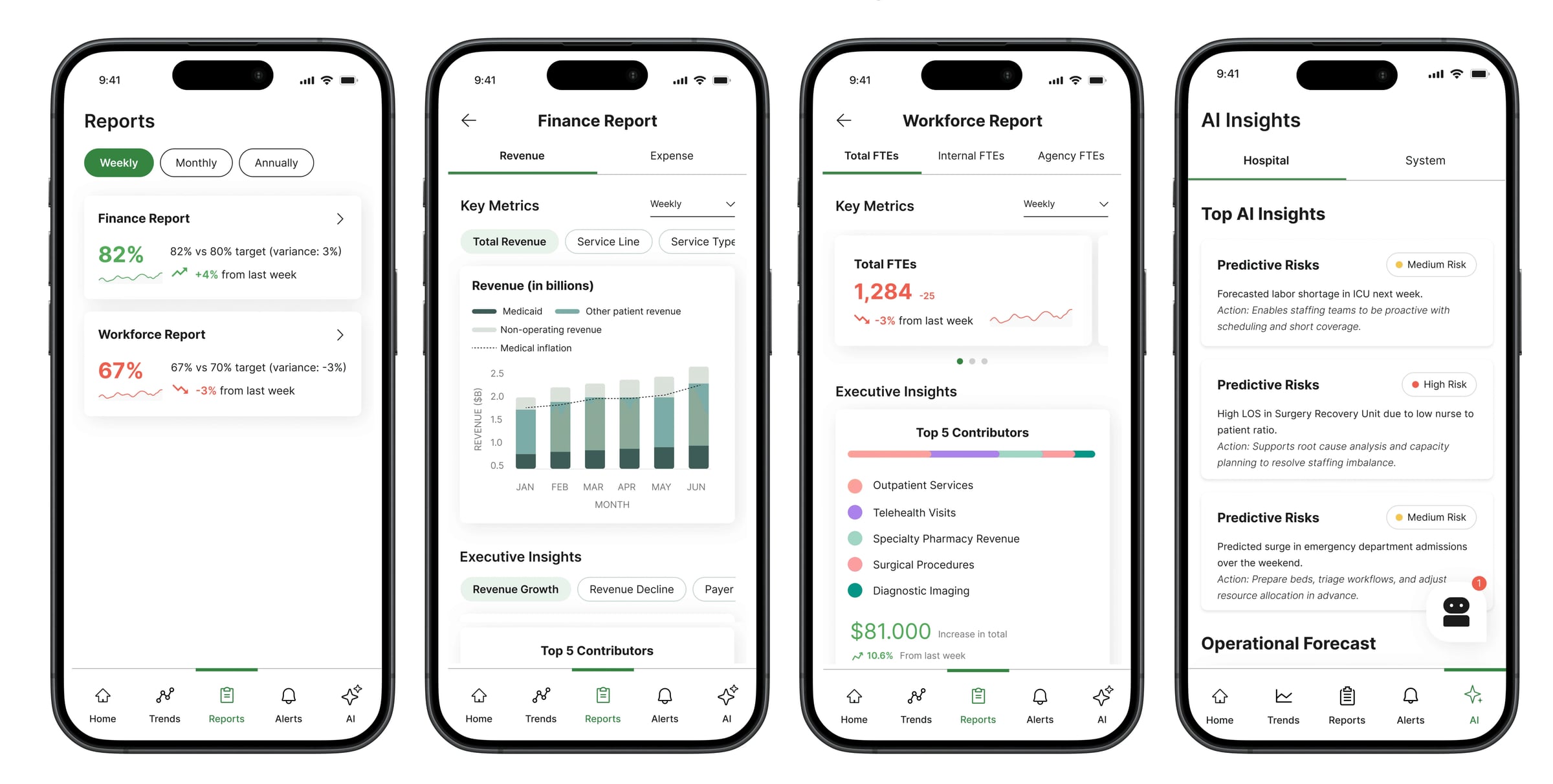
The EPMS mobile experience improved readability and access for executives on the go, surfacing trends and KPIs across operational domains.
Early concept demo – not final design
WhatEPMSSolvedandWhatItRevealed
EPMS successfully replaced fragmented Excel workflows and improved visibility into operational performance. However, as it was validated with stakeholders, a consistent gap emerged.
Executives understood what was happening, but still asked:
- What should we prioritize?
- What tradeoffs exist?
- What can we realistically execute?
This marked a turning point in the product's direction.
TheInflectionPoint:FromReportingtoDecisionSupport
At this stage, it became clear that dashboards alone were not enough. Leaders needed support making decisions under constraints such as staffing, cost, and competing initiatives.
The product vision shifted from performance reporting to decision enablement, setting the foundation for EPM.
Phase2:EPM—DecisionandExecutionPlatform
EPM was designed around a unified executive workflow that connects insight, action, and accountability.
OperatingReview
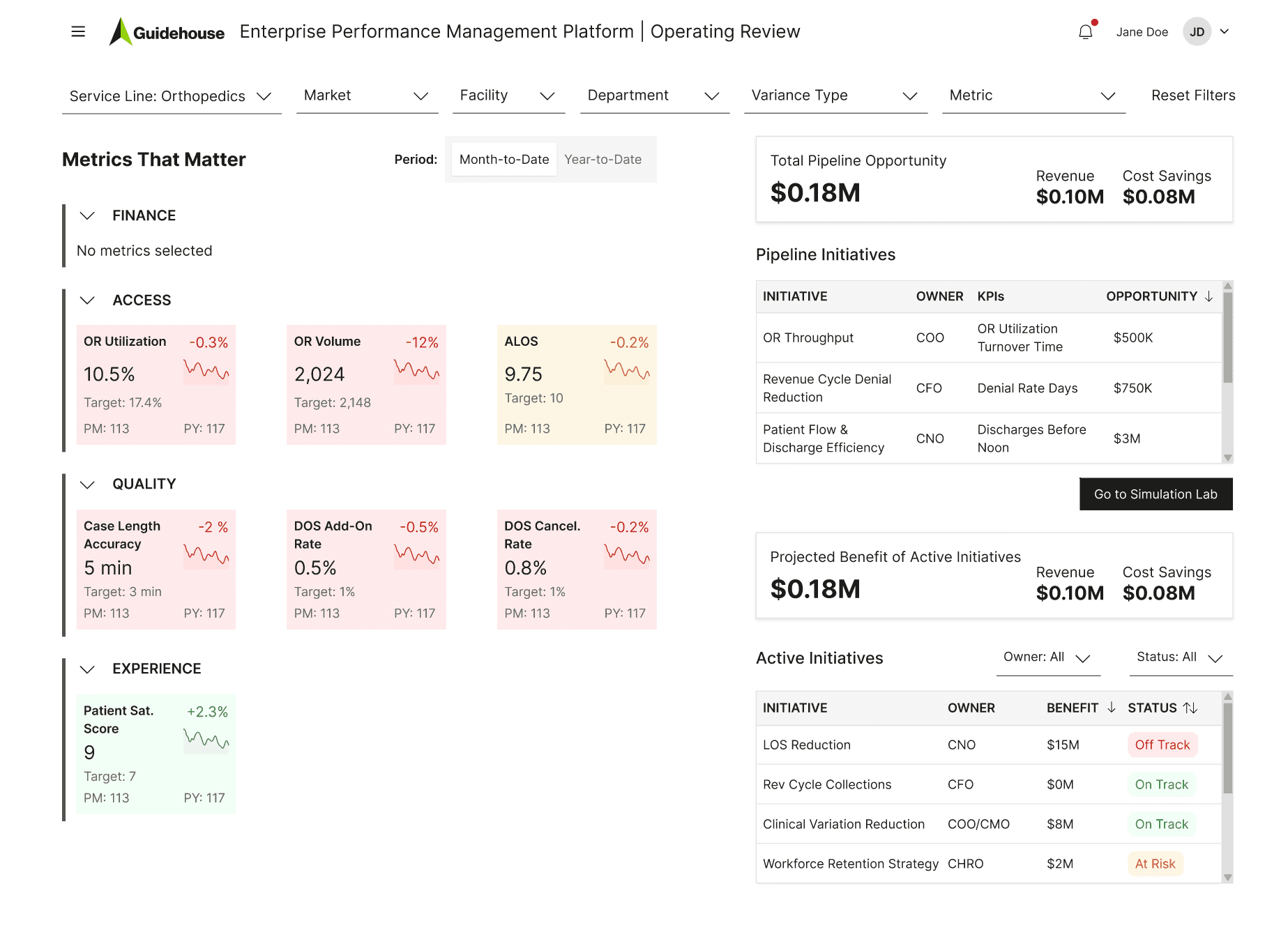
The Operating Review reframes performance monitoring as a decision moment, highlighting variances, trends, and targets aligned to executive priorities.
Simulation
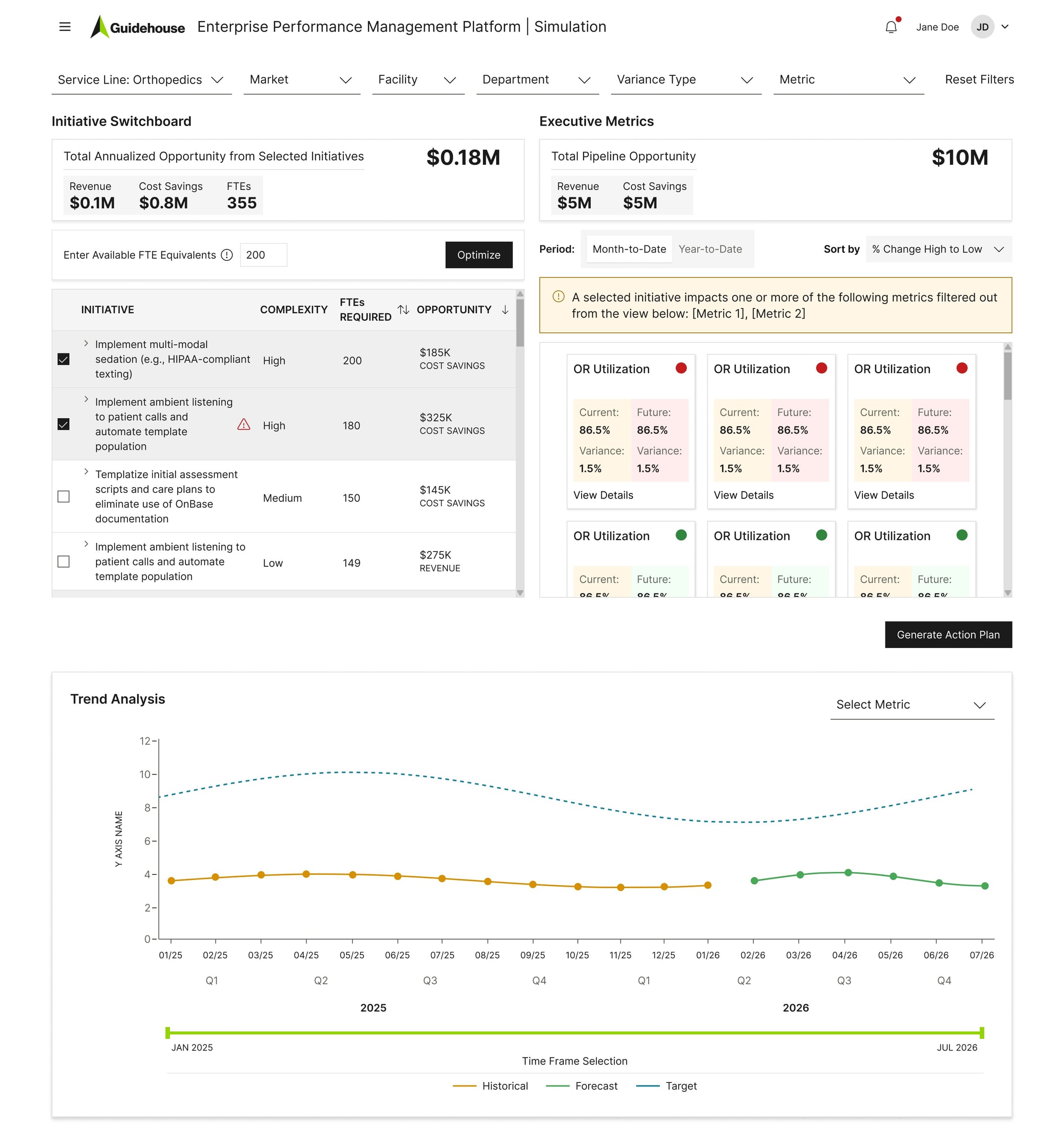
Simulation allows leaders to model initiatives against constraints such as staffing and cost, revealing downstream impact before committing to action.
ActionPlan
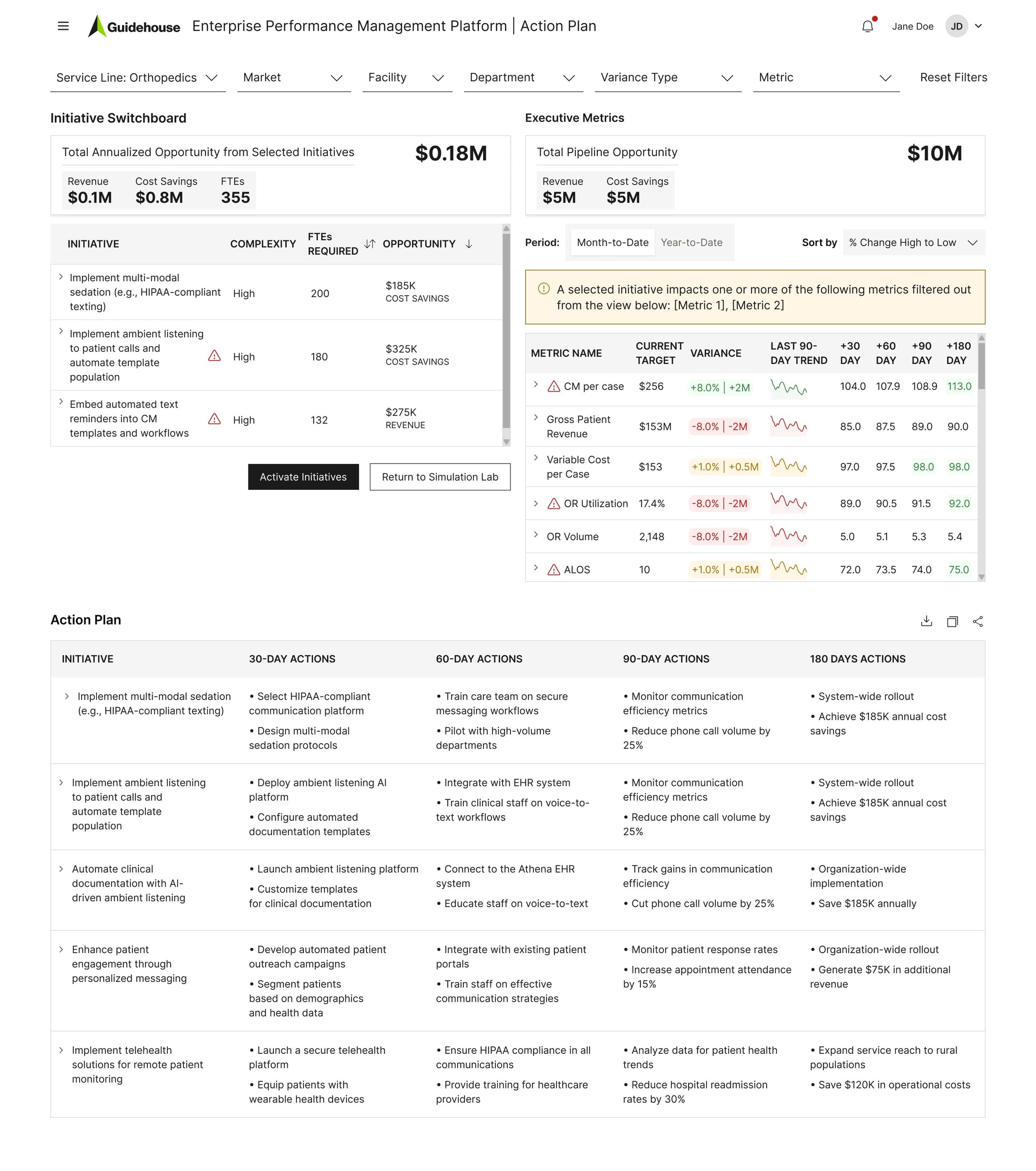
The Action Plan operationalizes decisions into time-phased actions with clear ownership, closing the loop from insight to execution.
Example of modeling initiative impact and generating an execution-ready action plan.
Designprinciplesthatenabledevolution
Several principles guided the product across all phases:
Vision-led, not tool-led
Design decisions were driven by executive needs, not dashboard conventions
Progressive disclosure
Complexity was revealed only when necessary, reducing cognitive load
Modular structure
Components were designed for reuse across mobile and web contexts
Change-tolerant UX
The system accommodated evolving requirements without breaking core workflows
These principles allowed the product to evolve without costly redesigns.
Outcomeandimpact
- Evolved from a mobile-first MVP into a production-ready web platform
- Aligned product, engineering, and business teams around a shared decision model
- Enabled leaders to move from awareness to scenario modeling and execution
- Achieved commercial adoption with Ohio State University as the final client